Jesse Jackson’s Legacy on Civil Rights and Technology
Jackson's legacy includes marching with Dr King and running for president twice. Less known is the work he did pushing tech companies to confront discrimination.
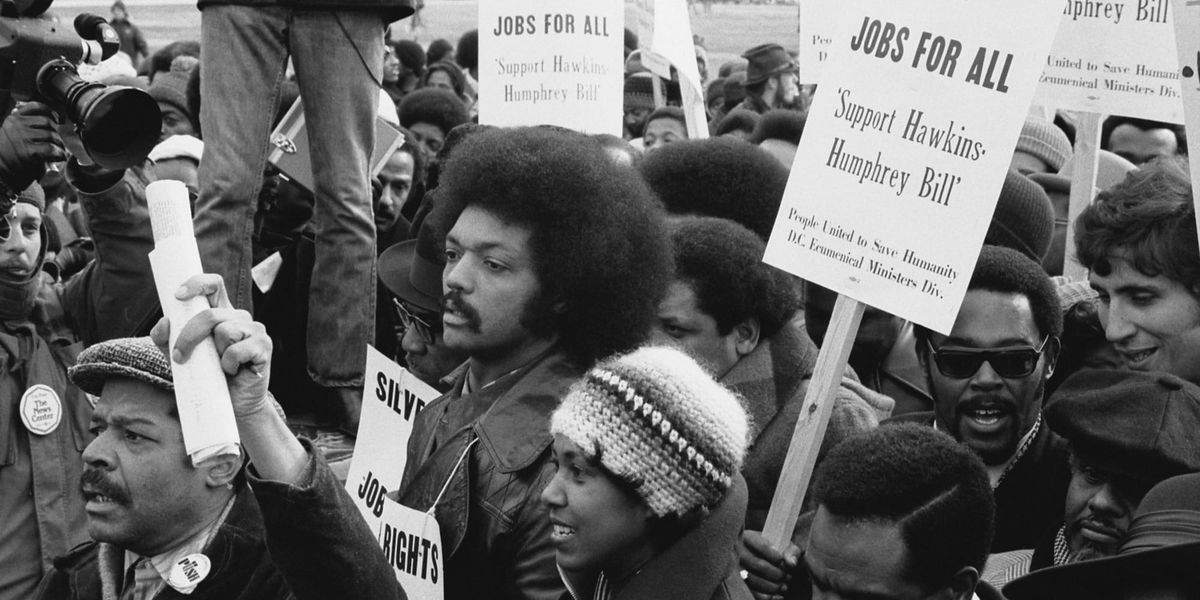
On April 4th, the anniversary of Dr. Martin Luther King Jr.'s assassination in 1968, I was reminded of the generations of civil rights leaders he inspired. Jesse Jackson is a great example, lost just this year, whose legacy includes marching with Dr. King and running for president twice. Less known is the work he did in his final years: pushing tech companies to confront discrimination on their platforms.
I’ve spent years working on racial justice in technology. I’ve sat through countless meetings in which engineers promise that algorithms will solve problems that centuries of activism couldn’t. I’ve watched companies announce diversity initiatives with fanfare, then quietly shelve them when the press cycle moves on. Cynicism comes easy in this work. But hearing a man who had marched with Martin Luther King Jr., who had spent decades translating moral urgency into political power engage seriously with the mechanics and metrics of tech platform usage? That unexpectedly gave me a feeling of hope. We already have a crucial asset to save society from runaway technology and too-big tech companies: civil rights leadership.
That hope came into focus for me through direct experience working on the committee for Airbnb’s Project Lighthouse, a tool Airbnb uses in the United States to uncover and address disparities in how users of different perceived races experience the platform. Airbnb developed it with guidance from a number of leading civil rights and privacy organizations, including the Color of Change, who invited Jackson to join a call about the project, and Center for Democracy and Technology, where I was the CTO.
The data that informed the work of our committee was damning. Hosts who perceived guests to be Black allowed fewer successful bookings than for guests perceived to be white. These were known issues exposed by external research as early as 2015, and many of the fixes nearly a decade later mirrored their recommendations. But internal to Airbnb it took data, advocacy, accompaniment and public pressure from civil rights organizations to make common sense changes, without which Airbnb would be in violation of civil rights law if only we regulated “tech platforms” like we regulate hotels and restaurants.
As a technologist I’ll be the first to point out that the technocratic impulse to measure, to optimize, to declare victory when the numbers tick in the right direction is not the same as durable social change. Laura W. Murphy put it more generously: “Airbnb has presented a powerful example of how to design products and build a community that is more welcoming for everyone. It’s the right thing to do and it’s good for business.”
I’ve worked on internet standards and terminology debates where the stakes felt abstract, where arguments about inclusive language in technical documents seemed disconnected from the lived experience of discrimination. Project Lighthouse turned platform decisions and user data into outcomes that civil rights advocates could demand accountability for.
Jackson’s presence on that call wasn’t as a technologist. What he brought was something absolutely crucial to the case for change: the weight of history, the reminder that every incremental gain was earned through struggle, and the insistence that measurable progress, however imperfect, beats performative concern.
Color Of Change worked with Airbnb for a year before the company launched the initiative. The result was a tech team whose job is to fight bias, changes to when hosts see guests’ photos, recruitment of more people of color as hosts, and new benchmarks for diversity on staff and the board of directors.
Airbnb’s own report acknowledges there is no finish line, however. They’ve made hundreds of updates to their service in the last few years, including refinements to how hosts decline reservation requests and stronger policies against hosts who cancel existing reservations under suspicious circumstances. They updated their Non-Discrimination Policy to include protections against caste discrimination. They launched an Entrepreneurship Academy to introduce people from underrepresented communities to hosting.
None of this would have happened without outside pressure. Without civil rights organizations willing to engage with the details of product and platform design. Without leaders like Jackson willing to lend their credibility to a process that could easily have been dismissed as corporate window dressing.
I think about that phone call often, and now Jackson is gone. The way his voice reminded everyone why we were there: To take the promise of technology and hold companies accountable when they fall short, it’s on the rest of us to continue the work. Jackson understood something essential: technology can change when civil rights leaders refuse to accept performative concern as a substitute for accountability.
Fediverse Sustainability Survey
The Social Web Foundation is running their first Fediverse Sustainability Survey seeking operators, moderators and administrators of Fediverse sites to fill out the anonymous survey and share information about how their instances work.
If you help run an instance, please take the 10-15 minutes needed to fill out the survey.
Want to appear here? Sponsor a newsletter.
Support the Internet Exchange
If you find our emails useful, consider becoming a paid subscriber! You'll get access to our members-only Signal community where we share ideas, discuss upcoming topics, and exchange links. Paid subscribers can also leave comments on posts and enjoy a warm, fuzzy feeling.
Not ready for a long-term commitment? You can always leave us a tip.